
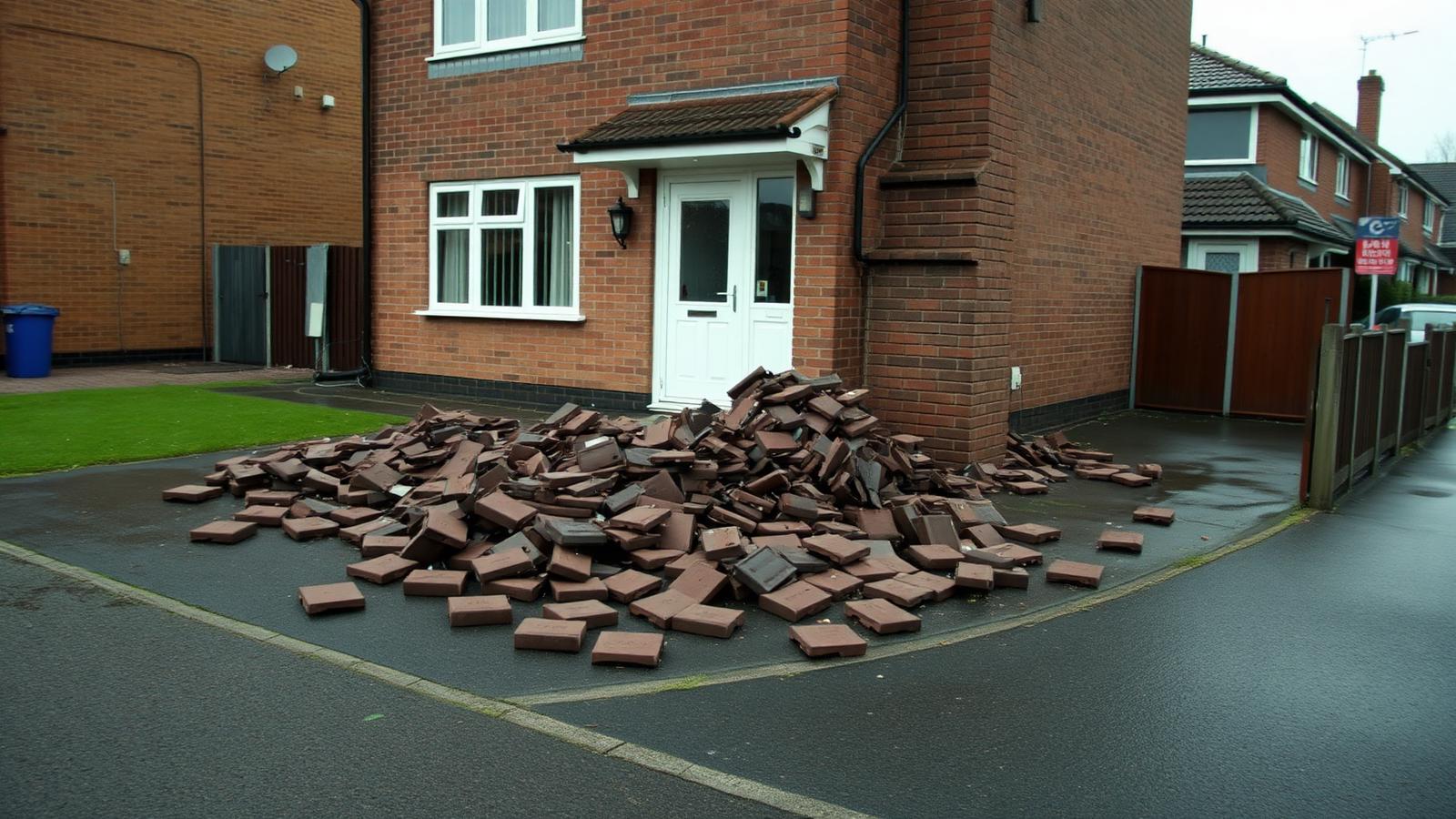
The first hour: people, then property
- Get everyone out of rooms directly under the damage. Wet plasterboard ceilings can collapse without warning hours after the storm.
- Cordon the falling-object zone outside. Move cars off the drive. Use cones, tape, garden chairs — anything that keeps pedestrians and children out from under loose tiles.
- Turn off the electrics for any affected rooms. Water and ceiling roses don't mix. If you can't isolate the room, isolate the house at the consumer unit and call an electrician.
- Don't go on the roof. More UK homeowners are injured climbing on storm-damaged roofs in the first 24 hours than during the storm itself.
Document everything for the insurer
Insurers will reimburse emergency make-safe and permanent repairs only if you can prove the original damage. Before any work starts:
- Photograph the exterior from at least three angles, ideally from a neighbour's upstairs window for the roof-line
- Photograph the interior — wet ceilings, stained plaster, dripping points
- Note the time and date the damage was discovered
- Save the local Met Office storm warning or wind-speed report for the same day
- Keep every receipt: emergency scaffold, tarpaulin, dehumidifier hire, alternative accommodation
Notify your insurer — within 24 hours
Most home and commercial policies require notification within 24–48 hours of the damage. Call the claims line, get a claim reference number, and ask three specific questions:
- "Will you reimburse emergency scaffolding under the make-safe provisions?"
- "Do I need to use one of your approved contractors, or can I appoint my own?"
- "What documentation do you need on the scaffold invoice?"
Almost every UK insurer accepts independent CISRS-carded scaffolders provided the invoice itemises the work and the firm carries £5m+ public liability cover. Get the answers in writing (email is fine).
Book the right scaffold — not just any scaffold
The emergency scaffolder's job is to make the property safe, give the roofer access, and keep water out. That's three different deliverables on the same call:
- Pedestrian make-safe: Cordon, gantry, or isolation barrier under any falling-object zone.
- Roofer access: Independent scaffold with boarded lifts to the working area.
- Weather cover: A sheeted temporary roof if the breach is large enough that tarpaulins won't hold for the repair window.
For small-area damage (a few tiles, a flashing strip), tarpaulin under a cap-flashing tile is fine for 48–72 hours. For ridge displacement, lifted valleys, or anything wider than 2 m², you need a sheeted temporary roof. See our tarp vs temporary roof comparison for the decision.
Avoid the storm-chaser scams
Within hours of any UK named storm, opportunistic "roofing" outfits door-knock the area. Common patterns:
- "We just happened to be in the area" — they weren't
- "Cash-only, today only" pricing
- No CISRS card, no PL insurance, no written quote
- Ladder up the roof inside 10 minutes of arriving — no scaffold, no fall protection
The insurer will reject claims for work done by uninsured doorstep traders. Always: written quote, named firm, insurance schedule, CISRS card check.
The 24-hour timeline
| Time | Action |
|---|---|
| 0–60 min | People safe. Cordon outside. Photos. |
| 1–3 hours | Call insurer for claim reference. Call CISRS scaffolder for emergency dispatch. |
| 3–6 hours | Emergency scaffold on site. Make-safe complete. Sheeted weather cover if needed. |
| 6–24 hours | Roofer survey. Permanent repair quoted. Insurer claim file populated with photos and emergency invoice. |
| 24–72 hours | Permanent repair starts. Scaffold remains in place through repair window. |
If you're in the first hour right now, call 07426 780 430. For wider context on emergency response, see our emergency scaffolding service page and the Essex response-times guide.