
What counts as a true scaffolding emergency
Scaffolders use the word "emergency" honestly. It's not a marketing term — it triggers a different rate, a different crew rotation, and a different design priority. The four scenarios that genuinely qualify:
1. Storm or wind damage
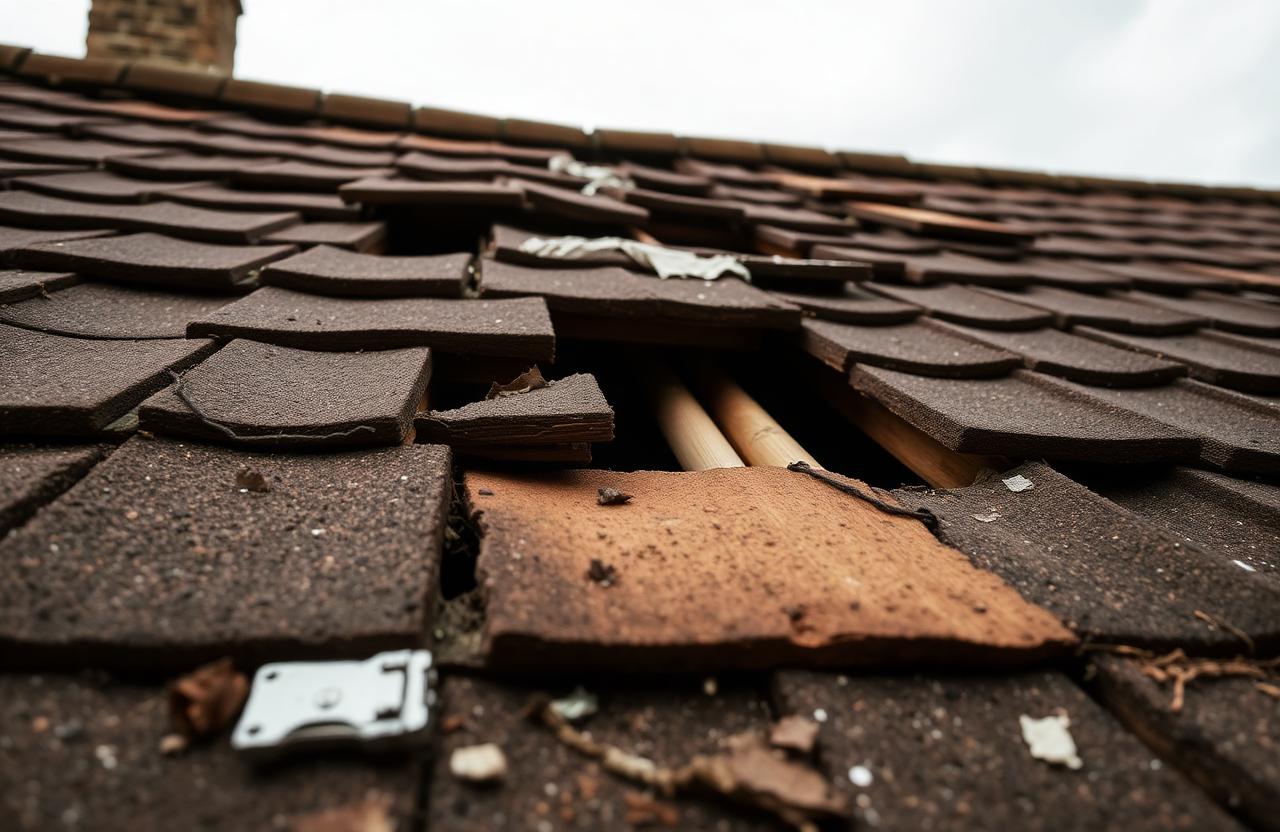
Lifted roof tiles, ridge displacement, chimney pots dislodged, lead flashing torn back. The roof is no longer watertight and the next rain band will reach the ceiling. Emergency scaffold goes up to give the roofer immediate safe access plus a sheeted weather cover where needed.
2. Partial collapse or structural movement
Bay-window subsidence, wall bowing, parapet failure, chimney leaning. Emergency propping and a buttressed scaffold to stabilise while a structural engineer surveys and writes the permanent remediation.
3. Fire damage
Roof voids burned out, gable walls heat-damaged, chimney pulled apart by water from the fire service. The property is unsafe to enter and unsafe to walk past — the scaffold isolates pedestrians and gives demolition or remediation crews safe access.
4. Vehicle impact and dangerous structures
Car into a corner of the building, lorry strike on a bridge or wall, scaffold collapse on a neighbouring site. Emergency design to shore the structure and cordon pedestrians until a permanent fix is engineered.
What doesn't count as emergency scaffolding
Honest scaffolders refuse the emergency rate for jobs that aren't:
- Re-roofing a perfectly watertight roof — that's planned work, book five days ahead
- Painting or rendering on a normal schedule
- "My builder is starting Monday and didn't tell me" — that's poor planning, not an emergency
- Insurance jobs where the insurer has already approved the scope and date — book it normally
If a scaffolder bills a normal job at emergency rates, get a second opinion.
What an emergency scaffolder should do on arrival
- Make safe first. Cordon any falling-object zone. Stop work above. Get pedestrians out of the danger area.
- Photograph the original damage. Insurers will need it. The scaffolder should email the photos within 24 hours.
- Design on site. A bespoke design to suit the actual damage — not a copy-paste of yesterday's standard scaffold.
- Erect a make-safe structure. Often a sheeted weather cover, a propped buttress, or a pedestrian gantry. Not the final scaffold.
- Issue an emergency handover. Tag the scaffold, log the inspection, send the certificate. The roofer or engineer needs paperwork to start.
Emergency rates — what to expect
Emergency scaffold pricing reflects out-of-hours dispatch, smaller-load wagons (you can't wait for a full lorry), and design-on-the-fly. Typical UK 2026 rates:
| Scenario | Typical emergency cost | Notes |
|---|---|---|
| Daytime same-day call-out (storm-damaged roof, single elevation) | £800–£1,400 | Includes 2-week hire |
| Out-of-hours (evening / weekend) | £1,200–£2,000 | +25–40% on standard |
| Structural propping + scaffold (partial collapse) | £1,600–£3,500 | Engineer required |
| Sheeted temporary roof, emergency erect | £2,000–£4,500 | Span-dependent |
What your insurer wants to see
Most home and commercial insurers will reimburse emergency scaffolding under the "make safe" provisions of the policy, provided you:
- Notify them within 24 hours of the damage
- Use a fully-insured CISRS scaffolder (£5m PL minimum)
- Get an itemised invoice — not a round-figure cash receipt
- Keep the original-damage photos and the scaffolder's design sketch
If you've had storm or impact damage, our emergency scaffolding service page sets out the response commitment and call-out process. For storm-specific guidance, see our first-24-hours storm-damage guide.